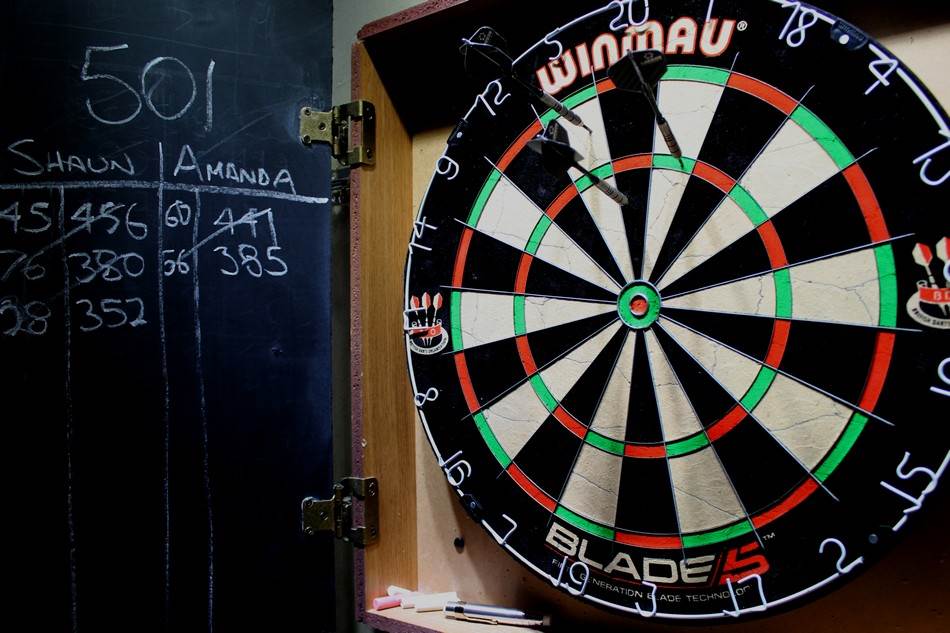
Darts, a game of precision and strategy, becomes a thrilling challenge when played under the rules of 501. This popular variation adds an extra layer of skill and calculation to the game, making each throw count toward the ultimate goal of reaching zero points. In this guide, we will delve into the rules, strategies, and variations of 501 darts to help you become a master of the game.
Before we delve into the intricacies of 501 darts, let's briefly explore the fundamental scoring system of darts. The dartboard is divided into various segments, each with its point value. The outer ring, known as the double ring, doubles the points, while the inner ring, the triple ring, triples the points. The bullseye at the centre is worth 50 points, and the outer bullseye is worth 25 points. Understanding these scoring nuances is crucial as players aim to maximise their points and strategically approach the path to victory in 501 darts.
To initiate a game of 501 darts, both players or teams start with a score of 501 points. The objective is to reach zero points by throwing darts at the dartboard, deducting the points scored from the total. The first to reach zero emerges victorious.
Prior to the commencement of a match, it is customary for players to determine the order of play. Typically, this involves a coin toss to decide which player "has the darts" and earns the privilege of throwing first. In high-stakes professional tournaments like the PDC's World Darts Championships, an additional method is employed - players engage in a throw-off for the bullseye. The player who either hits the bullseye or achieves greater proximity to it earns the right to throw first in the upcoming match.
Once a player has successfully initiated the game, the objective is to score as many points per round as possible. The triple 20, being the highest-scoring target on the dartboard, is often the primary focus. A perfect round of three darts in the triple 20 scores an impressive 180 points. However, strategic considerations, such as avoiding blocked targets, may prompt players to aim for alternative sections.

A designated marker or chalker is responsible for keeping score in 501 darts. After each player's turn, the marker adds up the points scored and deducts them from the running total on the scoreboard. This role requires a keen understanding of the game, including knowledge of the current score, remaining points, and whose turn it is.
The pinnacle of a 501 darts match is reaching that crucial moment when players aim to secure victory by "doubling out." This phase, marked by strategic finesse, requires players to carefully select a double on the dartboard that will precisely bring their total score to zero.
Strategically, players often assess their remaining score and select a double that facilitates a seamless progression down to zero. For instance, if a player has 40 points left, hitting the double 20 would see them win the game. Planning ahead and targeting specific doubles become essential elements of this critical phase.

It's imperative to exercise caution during the doubling-out process. If a player inadvertently hits more points than their remaining score, they "bust," resulting in the termination of their turn. This adds an element of suspense to the game as players strive for precision while facing the pressure of achieving the elusive double that will secure their victory.
In professional tournaments, the doubling-out phase showcases the true mastery of darts players, separating the contenders from the champions. As players carefully calculate their moves and eye the perfect double, the tension in the room intensifies. The ability to maintain composure and execute a successful double-out is a testament to a player's skill, nerve, and understanding of the game.
In a variant of the traditional 501 game, exemplified in prestigious tournaments like the PDC's World Grand Prix, players engage in a distinctive "double in" method to commence a leg. This alteration adds an extra layer of complexity and strategy to the game, as players must first land a dart in one of the double sections around the outer ring of the dartboard before their score becomes active.
Unlike the standard 501 rules, this approach requires players to exhibit precision and finesse right from the outset. The challenge of doubling in at the beginning of a leg introduces an element of suspense, as players must navigate this initial phase before proceeding to score points, and inevitably “double out” to win the game.
This variation not only demands a heightened level of skill but also underscores the importance of strategic decision-making at the onset of each leg, contributing to a unique and compelling dynamic in the world of professional darts.
Mastering 501 darts requires a blend of precision, strategy, and mathematical acumen. By understanding the rules, practicing effective doubling in and out, and implementing strategic tips, you can elevate your game and enjoy the thrill of this classic pub sport. So, gather your darts, aim for the bullseye, and embark on the exciting journey of 501 darts mastery.
Related articles
What is a double fault in tennis?
For those of you who do not follow tennis keenly , and are interested in learning the nuances of the sport, one of the key rules you’ll need to know a

What is a walkover in tennis?
In general, a walkover means a situation where one participant or team wins because the other does not show up or is unable to compete. The term walko

Best Tennis Player of All Time: Ranked!
To rank the best tennis players of all time, we assigned scores based on a weighted evaluation of their key career milestones. Weightage Criteria : To
FAQs
- Where can I find more betting tips and predictions?
- Visit our Betting section and Predictions pages for the latest tips, odds, and analysis across sports.
- How do I bet responsibly?
- Set a budget, never chase losses, and take breaks. See our Responsible Gambling policy for full guidance.
- Where can I read more articles on this topic?
- Browse our Articles page or use the category links above to see all content in this section.